
Our core specialty
Ship-to-ship operations
Planning, coordination and technical execution of STS operations — with attention to vessel compatibility, personnel readiness, equipment, operating conditions and risk controls.
Why STS goes wrong
The operation is decided long before the approach.
Ship-to-ship transfers bring two crews, two vessels of different size and freeboard, and a cargo of real value together in open water. What makes them safe and efficient is not improvisation on the day — it is a plan that has already answered the hard questions.
We assess, plan and verify readiness first. Execution then follows the plan, with conditions monitored and stop criteria respected.
Our process
Five steps, every operation.
- 01
Assess
Vessel particulars, compatibility, location, weather window, cargo and regulatory requirements.
- 02
Plan
A written operation plan: mooring arrangement, fenders and hoses, communications, roles and stop criteria.
- 03
Verify readiness
Personnel, equipment and both vessels checked against the plan. If something is not ready, we say what must change.
- 04
Execute
Approach, mooring, transfer and unmooring under disciplined supervision, with conditions monitored throughout.
- 05
Report
Clear close-out reporting: what was done, what was observed, and anything to carry into the next operation.
In the field
Ship-to-ship operations, as they happen.
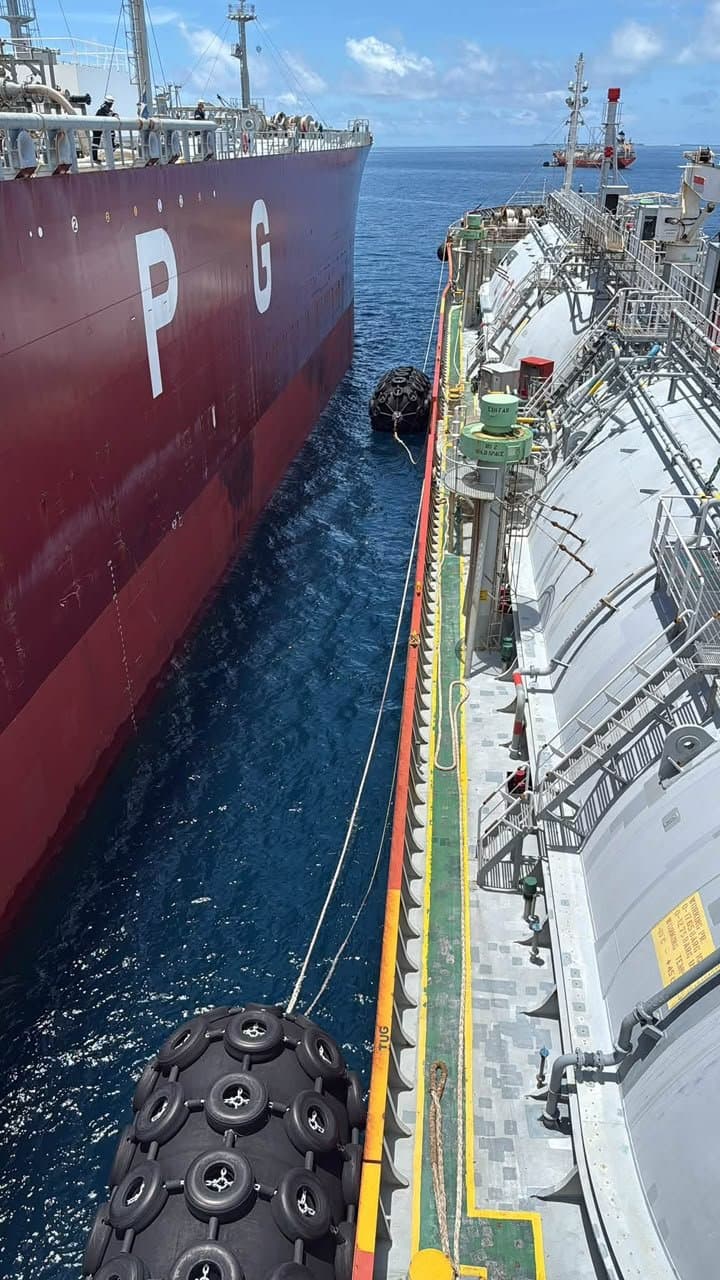
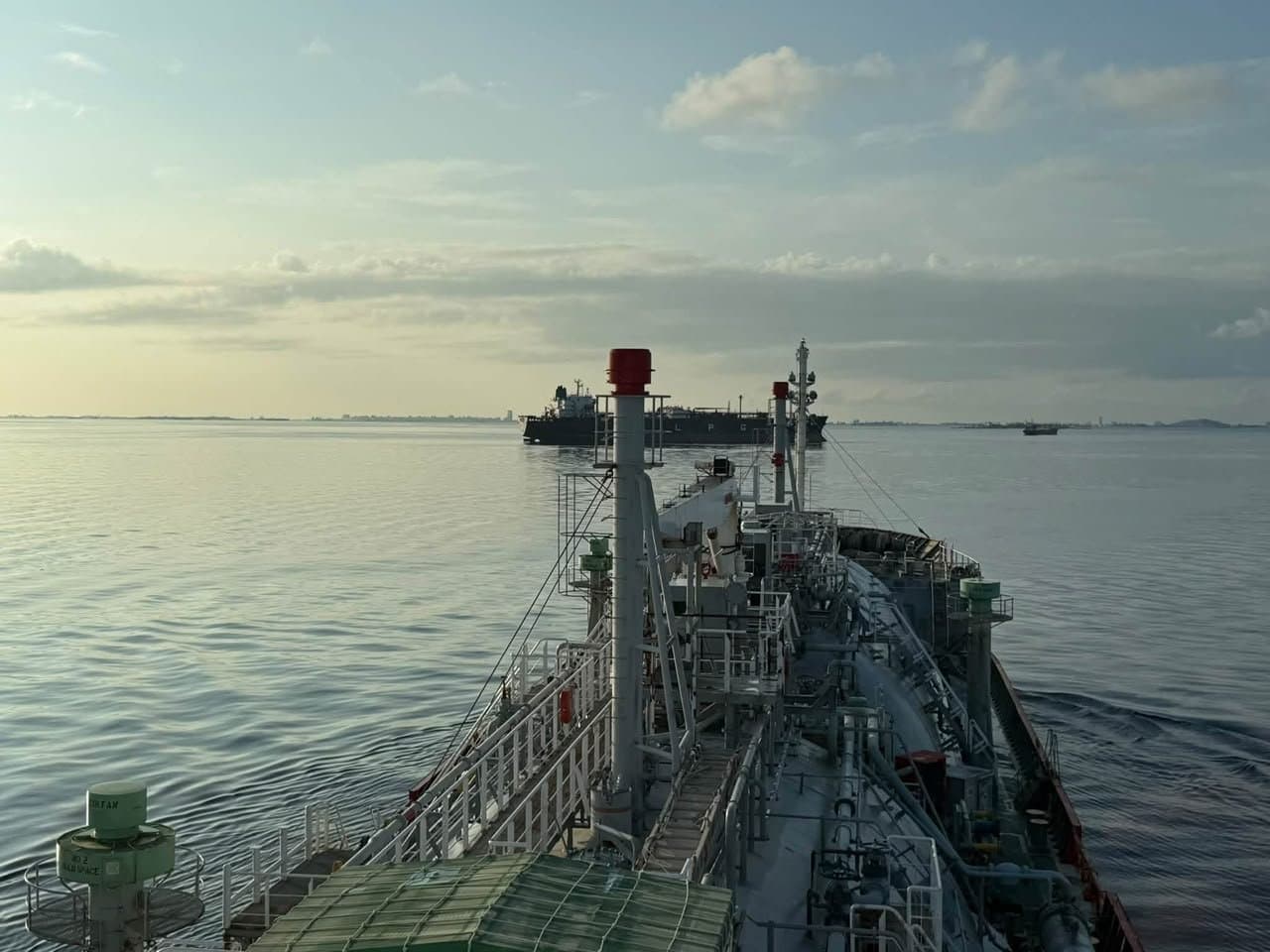
J LINE's own photographs and footage. Vessel names, IMO numbers and owners' marks are obscured to protect our clients' confidentiality.
On deck
From the air
Watch an operation
The approach, in motion.
The manoeuvring vessel closes in on the vessel at anchor, fenders in place, and both are made fast for the transfer.
Planning the approach
Which vessel anchors, which manoeuvres, and how they meet.
In a typical LPG transfer the smaller gas carrier lies at anchor while the VLGC manoeuvres alongside on a planned approach line. The approach, the fender positions and the mooring sequence are agreed in the plan before either vessel moves.
STS services
Choose your operation

LPG STS transfer →
VLGC to pressurised carriers, LPG products debunkering and gas vessel port clearance.

Crude oil STS →
High-capacity transfers involving VLCCs and crude tankers, managed with precision.
STS readiness & risk assessment →
Compatibility, personnel, equipment and conditions — verified before you commit.
Questions
About STS operations
J LINE Shipping is a maritime solutions company specialising in ship-to-ship (STS) operations, supported by flag registration and seafarer documentation, vessel inspections, and crew change, husbandry, bunkering and ship management support, for shipowners, charterers and vessel operators.
What is a ship-to-ship (STS) transfer?
A ship-to-ship transfer moves cargo — such as crude oil, petroleum products or liquefied gas — directly between two vessels moored alongside each other, at anchor or underway, instead of through a port terminal.
What does J LINE provide for an STS operation?
Assessment of the vessels and location, a written operation plan, readiness verification of people and equipment, supervised execution from mooring to unmooring, and close-out reporting.
Which standards do you plan STS operations against?
Our planning follows recognised industry guidance, including the OCIMF/CDI/ICS/SIGTTO Ship to Ship Transfer Guide, and the STS operations plan requirements of MARPOL Annex I for oil tankers.
How early should we contact you?
As early as possible — ideally before the vessels and window are fixed. Most risks and delays are cheapest to resolve at the planning stage.
Start here
Planning an STS operation?
Vessels, cargo, location and timing — whatever you know so far. We will come back with an honest assessment, the options, and a clear scope and cost.
A reply from a specialist · No obligation · Your details stay confidential